
How Families Can Share Passwords Without Relying on the Cloud
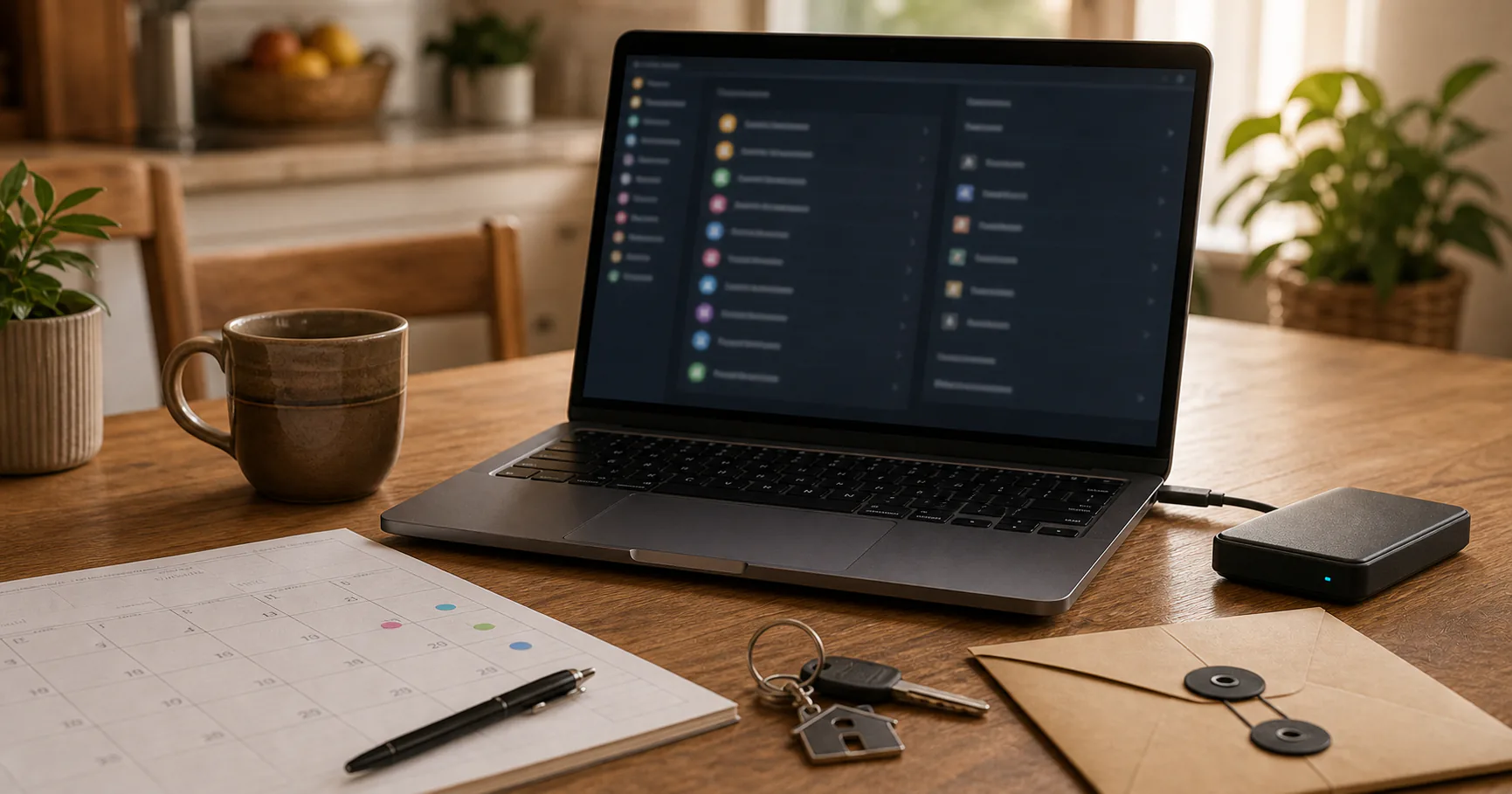
A password manager without cloud can work for families, but it needs a simple sharing and recovery plan. Household passwords often include streaming accounts, utilities, school portals, banking, email, devices, and emergency information.
The challenge is balancing privacy, shared access, and recovery without passing around plaintext notes or unmanaged vault copies.
When no-cloud password management fits a family
A no-cloud setup fits families that want local control and do not need every password synced automatically to every device. It works best when one or two adults can maintain backups and recovery material.
It is harder for families that need frequent shared updates across many devices.
| Good fit | Harder fit |
|---|---|
| Small household | Many users and devices |
| Clear adult owner | No one maintains backups |
| Privacy-focused family | Need instant sharing |
| Emergency binder habit | No recovery routine |
Separate shared and private passwords
Do not put every family member's private accounts into one shared vault. Create a clear boundary between household credentials and individual accounts.
Shared entries should be limited to things the household genuinely manages together.
- Shared: utilities, home router, subscriptions, family devices.
- Private: personal email, banking, health portals, work accounts.
- Emergency: recovery instructions with clear consent.
- Archived: old accounts kept only for records.
Shared devices increase local risk
A local vault on a shared family computer may be exposed to more browser extensions, downloads, games, and user accounts. Keep the vault on a trusted adult account where possible.
Avoid unlocking sensitive entries on children's or guest profiles.
| Device | Guidance |
|---|---|
| Adult laptop | Best place for full vault |
| Shared desktop | Use limited access |
| Child device | Avoid full vault |
| Guest profile | Do not unlock vault |
Plan emergency access without oversharing
Families need recovery for serious situations, but emergency planning should not expose every password casually. Use sealed offline notes, a trusted person, or a carefully documented recovery process.
The plan should explain how to restore access without listing every secret in plain text.
- Document where the vault backup is.
- Name who should access it.
- Keep master password recovery separate.
- Update after major changes.
- Review twice a year.
Family vault backups need a responsible owner
A local family vault should have a named maintainer. Otherwise backups become vague and stale.
Keep encrypted backups outside the main household computer and test restore.
| Backup item | Family guidance |
|---|---|
| Encrypted vault | Keep multiple protected copies |
| Keyfile | Duplicate carefully if used |
| Recovery note | Store offline |
| Plaintext exports | Avoid as backups |
Avoid casual vault file sharing
Copying a full vault to everyone can make revocation and updates difficult. If a child or relative only needs one login, do not distribute the whole vault.
For frequent sharing, a no-cloud setup may be less convenient than a managed family password manager.
- Share only what is needed.
- Avoid sending vault files in chat.
- Rotate shared passwords after access changes.
- Keep personal accounts separate.
- Use MFA on important shared accounts.
Teach the family a few simple habits
The family does not need to understand cryptography. They need to know which vault to use, what not to write down, and who handles recovery.
Simple household rules beat complicated security lectures.
- Do not reuse passwords.
- Do not save new passwords only in the browser.
- Ask before exporting passwords.
- Lock the vault after use.
- Tell the maintainer when shared passwords change.
Family no-cloud setup checklist
Keep the family setup small and documented. A local vault that only one person understands can become a problem in an emergency.
- Create shared and private boundaries.
- Pick a maintainer.
- Back up the shared vault.
- Document emergency restore.
- Review shared accounts quarterly.
- Remove old plaintext notes.
Conclusion
A password manager without cloud can work for families when shared credentials are limited, backups are owned, and emergency access is documented carefully.
The goal is not to make every secret available to everyone. It is to reduce reuse, protect household accounts, and keep recovery possible.